On December 1, the four-week season of Advent will begin. The word Advent means “coming,” and for more than a thousand years, Christians have observed this season as a time of expectant waiting and celebration of the coming of Christ at his birth, and his eventual return as King of Kings.
Advent invites us to remember two extraordinary promises. First, God came near to us in human form through Jesus, who was born to save us from our sins. We call this the First Advent. And one day, Jesus will come again, not as a baby, but as the triumphant King who will rule and reign forever. We call this the Second Advent.
As we wait, Advent gives us an opportunity to slow down during a busy season and prepare our hearts for Christmas. It reminds us of the hope, peace, joy, and love we have because Jesus came, and because he is coming again.
That’s why we’ve created this Advent devotional booklet. Each day throughout December, it will help you reflect on the meaning of Christ’s coming and prepare your heart to celebrate his birth.
Our hope is that these devotions will help you and your family experience Christmas with a renewed sense of wonder and gratitude as you celebrate the joy of Jesus’ arrival and look forward with hope to the day he returns and makes all things new.
As you make these Advent readings part of your Christmas celebration, we pray they draw you closer to Jesus and fill your heart and home with the hope, peace, joy, and love of Christmas.
God bless you,
Rick & Kay Warren
Contents
An Advent Devotional Journey
December 1
Immanuel, God with Us
“‘The virgin will conceive and give birth to a son, and they will call him Immanuel’ (which means ‘God with us’).”
Matthew 1:23 (NIV)
At Christmas, we celebrate the time when God came to earth to live with us for a while. That’s why Jesus is called Immanuel, which is Hebrew for “God with us.”
This means Jesus was God in human flesh. Theologians call this the Incarnation, and it means Jesus was a real person, not a myth, not a fable, and not just a nice story. He was flesh and blood, bones and hair; he was God incarnate. And that makes Christmas so much more than nice feelings and well wishes.
Long before the birth of Jesus, the Old Testament prophet Isaiah predicted the arrival of Immanuel, the promised Protector and Savior of the human race. In fact, in Matthew 1:23, Matthew is actually quoting Isaiah 7:14, which says, “Therefore the Lord himself will give you a sign: The virgin will conceive and give birth to a son, and will call him Immanuel” (NIV). Even in Isaiah’s time, the world waited and longed for the arrival of Jesus.
For us today, Advent is a season of expectation when we remember Jesus’ first coming and look with anticipation toward his second coming. The apostle Paul wrote that this time of intense waiting and hoping for the return of Jesus could be compared to the labor pains experienced during childbirth (Romans 8:22). We know the baby is coming soon, and we wait with confident expectation for Jesus to return.
Advent is a time for us to slow down and refocus, not only on Jesus as a baby but also on him as Christ, the returning King, who will come to take us home to heaven.
The arrival of Jesus, Immanuel, proves that God can and will fulfill his promises to us. And that means we can know for certain that hoping for Jesus’ return will never lead to disappointment. God can be trusted. He will always do exactly what he promises to do.
We know that in Bethlehem, “The Word became flesh and made his dwelling among us” (John 1:14 NIV). And we can be certain that in the future, “God’s presence is with people, and he will live with them, and they will be his people. God himself will be with them and will be their God” (Revelation 21:3 NCV).
December 2
Jesus Is Hope Fulfilled
“But the angel said to her, ‘Do not be afraid, Mary; you have found favor with God. You will conceive and give birth to a son, and you are to call him Jesus. He will be great and will be called the Son of the Most High. The Lord God will give him the throne of his father David, and he will reign over Jacob’s descendants forever; his kingdom will never end.’”
Luke 1:30-33 (NIV)
The exact timing of Jesus’ birth may have been a surprise to many of the people who were there to witness it, but the fact that he would arrive was not. For hundreds and hundreds of years before his birth, prophets foretold that God would send the promised Messiah.
In the Old Testament, prophets predicted Jesus would be born of a virgin (Isaiah 7:14). They predicted his birth in Bethlehem (Micah 5:2). They predicted he would come from the line of David (2 Samuel 7:12-13; Isaiah 11:1-2) and that he would “reign on the throne of David and over his kingdom, to establish and sustain it with justice and righteousness from now on and forever” (Isaiah 9:7 HCSB).
God did not leave us in the dark about his plans. He told us what to look for as we waited for him to fulfill the promise of the prophecies.
For instance, more than 700 years before Mary and Joseph settled into the stable, the prophet Isaiah gave this prophecy: “For to us a child is born, to us a son is given, and the government will be on his shoulders. And he will be called Wonderful Counselor, Mighty God, Everlasting Father, Prince of Peace” (Isaiah 9:6 NIV).
And Jeremiah spoke specifically about how the coming King would be our righteousness. Speaking through Jeremiah, God said, “The days are coming . . . when I will raise up for David a righteous Branch, a King who will reign wisely and do what is just and right in the land. In his days Judah will be saved and Israel will live in safety. This is the name by which he will be called: The LORD Our Righteous Savior” (Jeremiah 23:5-6 NIV). Now Jesus has become our righteousness through his death and resurrection.
The angel also prophesied to Mary about the coming King: “You will conceive and give birth to a son, and you are to call him Jesus. He will be great and will be called the Son of the Most High. The Lord God will give him the throne of his father David, and he will reign over Jacob’s descendants forever; his kingdom will never end” (Luke 1:31-33 NIV).
The birth of Jesus was prophecy fulfilled and hope realized. Advent reminds us that we can trust God to keep his promises, including his promise of salvation through Jesus: “For God so loved the world that He gave His only begotten Son, that whoever believes in Him should not perish but have everlasting life” (John 3:16 NKJV).
God is ever-faithful, speaking through prophets and angels down through the ages, promising a holy child who became our deliverer, the eternal King who sits on the eternal throne. He will establish a kingdom of peace and justice and give us eternal life with the Father.
We wait, and we hope.
December 3
God Is Working Out His Plan
“In those days Caesar Augustus issued a decree that a census should be taken of the entire Roman world. (This was the first census that took place while Quirinius was governor of Syria.) And everyone went to their own town to register. So Joseph also went up from the town of Nazareth in Galilee to Judea, to Bethlehem the town of David, because he belonged to the house and line of David.”
Luke 2:1-4 (NIV)
There’s a lot going on in the Christmas story: shepherds watching their flocks, wise men riding in from the east, an evil and conniving king, a newborn baby in a manger, a virgin girl with child, the angel Gabriel with a message from God, Old Testament prophecies coming true, no rooms left in the inn, a magnificent and shining star, a perfectly timed Roman census, the long-awaited eternal King, heavenly warnings about imminent danger, awesome dreams, and a chorus of angels.
It’s nearly impossible to argue that all this happened by coincidence. There’s clearly a coordinated plan that relied on precise prophecy and exact timing. If just one event arrived too early or too late, the whole plan would fall apart. If just one person were missing, the story would stumble off course.
Think about how difficult it is for you to coordinate all the things you think you should do this Christmas season. Can you buy all the gifts and get them wrapped on time? Can you get to the party or the kids to the Christmas play on time? Can you coordinate a Christmas dinner for relatives and friends? Is there enough time to prepare for the Christmas Eve worship service, physically and spiritually?
Think about how tough it is just to get a bunch of kids into their angel costumes and onstage at just the right moment during a Christmas play.
Yet God sends Gabriel to talk to Mary, and sends a group of angels to the shepherds, and lights up the sky with a star so bright it calls wise men from the east. And he makes it seem so effortless.
That’s because he’s God, and he can move heaven and earth to work out his plans for us and for our salvation. And his hand is on the details of our story.
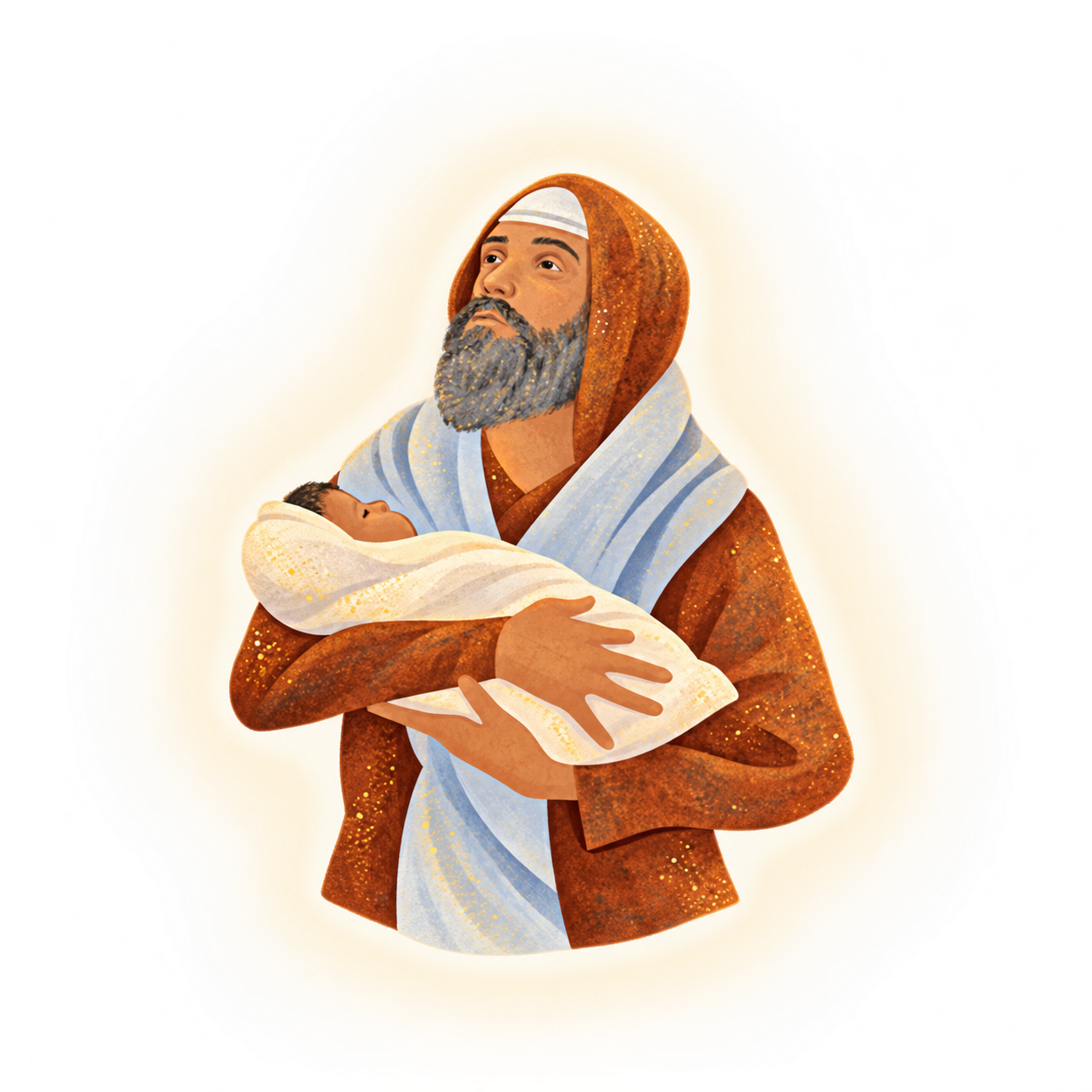
Consider the story of Simeon: God promised him that he would not die until he had seen the Christ. When Jesus was eight days old, Mary and Joseph brought him to the temple, as the law required—but Simeon wasn’t there that day! He could have missed seeing Jesus, except that the Holy Spirit guided Simeon to go to the temple at just the right time.
When he saw Jesus, “Simeon took him in his arms and praised God, saying: ‘Sovereign Lord, as you have promised, you may now dismiss your servant in peace. For my eyes have seen your salvation, which you have prepared in the sight of all nations: a light for revelation to the Gentiles, and the glory of your people Israel’” (Luke 2:28-32 NIV).
Advent is about patiently waiting. And while we wait, we remember two things: One, God is never in a hurry. And two, God is never late. His timing is always perfect. God already knows what he’s going to do in your life next month, next year, and in the next decade, and his plan for you is good.
The Living Bible paraphrase says, “Rest in the Lord; wait patiently for him to act. . . . Don’t fret and worry—it only leads to harm” (Psalm 37:7-8).
December 4
Mighty God, Born in a Manger
“While they were there, the time came for the baby to be born, and she gave birth to her firstborn, a son. She wrapped him in cloths and placed him in a manger, because there was no guest room available for them.”
Luke 2:6-7 (NIV)
You simply can’t miss Christmas as a cultural experience.
But you can miss the birth of Jesus. You can miss the very point of Christmas.
That dilemma isn’t just a product of our time. Even people who were alive during that very first Christmas, just right around the corner from Jesus himself, missed his arrival.
As Mary goes into labor on their way into Bethlehem, Joseph tries to check her into the local Holiday Inn. The innkeeper comes out and says, “Sorry, no vacancies. There’s no room in the inn.”
The innkeeper has no use for a pregnant woman or a newborn baby. He doesn’t know who he is snubbing. The Son of God could have been born in that inn. Imagine the PR power of that! That innkeeper could have put up a sign: “Son of God born here!” His inn would have been sold out for the rest of his life.
God loved us enough to be Immanuel, God with us, yet he did not step off a cloud as an adult and start flashing his powers. Instead, he came in humility.
The Bible says in John 1:10-13, “He was in the world, and though the world was made through him, the world did not recognize him. He came to that which was his own, but his own did not receive him. Yet to all who did receive him, to those who believed in his name, he gave the right to become children of God—children born not of natural descent, nor of human decision or a husband’s will, but born of God” (NIV).
People missed his first arrival because they were waiting for him to come in extraordinary fashion. Today we miss him because we do not expect him to be interested in our everyday lives or to use us for his good purpose.
But God is right here. He wants to be a part of your life. God coming into the lives of ordinary people like you and me is the point of Christmas.
If the innkeeper knew he was sending the Messiah to the manger, would he have made room in the inn? God has made clear to us who Jesus is and what he has done for us. So will we make room for him as we anticipate his work in us and his second coming?
December 5
We Hope for Things Seen and Unseen
“When Elizabeth heard Mary’s greeting, the baby leaped in her womb, and Elizabeth was filled with the Holy Spirit. In a loud voice she exclaimed: ‘Blessed are you among women, and blessed is the child you will bear! But why am I so favored, that the mother of my Lord should come to me? As soon as the sound of your greeting reached my ears, the baby in my womb leaped for joy. Blessed is she who has believed that the Lord would fulfill his promises to her!’”
Luke 1:41-45 (NIV)
Because Advent is about expectation, it’s noteworthy that we find two expectant mothers in the Christmas story: Mary, expecting the arrival of her son, Jesus, and Elizabeth, expecting the arrival of her son, John.
The Old Testament prophet Isaiah foretold the birth of both babies. In Isaiah 7:14, he said we should expect the arrival of Jesus, Immanuel, “God with us.” And in Isaiah 40:3, he said to expect someone who would be like a voice calling out in the wilderness, preparing people to receive salvation and the forgiveness of sins that would come through Jesus.
In the Christmas story, we see these two prophecies fulfilled. Elizabeth is barren, she has no children, and she’s considered too old to have a baby (Luke 1:7). Mary is a young girl, a virgin, and not yet married.
Who else but God could work out these details? Both Mary and Elizabeth show how God uses ordinary people, just like us, to do extraordinary things. Elizabeth sees God at work, saying, “The Lord has done this for me” (Luke 1:25 NIV), and Mary sums it up for believers down through the ages: “For there is nothing that God cannot do” (Luke 1:37 GNT).
From both these expectant mothers we can see the hope that comes from Jesus. We see how God can use anyone and everyone. And that means we can hope for things unseen, knowing God will fulfill his promises.
When the angel tells Mary she will give birth to the Savior of the world, she prays a prayer often called the Magnificat or the Song of Mary: “My soul glorifies the Lord and my spirit rejoices in God my Savior, for he has been mindful of the humble state of his servant. From now on all generations will call me blessed, for the Mighty One has done great things for me—holy is his name. His mercy extends to those who fear him, from generation to generation. He has performed mighty deeds with his arm; he has scattered those who are proud in their inmost thoughts. He has brought down rulers from their thrones but has lifted up the humble. He has filled the hungry with good things but has sent the rich away empty. He has helped his servant Israel, remembering to be merciful to Abraham and his descendants forever, just as he promised our ancestors” (Luke 1:46-55 NIV).
Elizabeth and Mary are waiting on the arrival of John and Jesus, and their attitudes reflect how we should approach Advent. An expectant mother patiently longs for her baby to be born. She prepares and plans and adjusts her life, focusing on only the things that matter most. With growing joy, she anticipates the day the baby will arrive. And that’s what God invites us to do as we celebrate the birth of Jesus.
December 6
John Prepares the Way for Jesus
“You, my child [John], will be called a prophet of the Most High; for you will go on before the Lord to prepare the way for him, to give his people the knowledge of salvation through the forgiveness of their sins, because of the tender mercy of our God, by which the rising sun will come to us from heaven to shine on those living in darkness and in the shadow of death, to guide our feet into the path of peace.”
Luke 1:76-79 (NIV)
On the night before his death, Jesus called the disciples his friends because he had confided in them, telling them everything the Father had told him (John 15:15). The fact is, God has confided in the human race for thousands of years. We can see just a small example of that by looking through the many prophecies related to Jesus’ birth.
But God’s desire to reveal his plan didn’t stop with the Old Testament prophets. He inserted a prophet directly into the Christmas story. And, just like Jesus, this prophet came as a baby. He even started doing his job while he was still in the womb.
We know this prophetic baby as John the Baptist, and when Mary greeted his mother, Elizabeth, John leaped in her womb because Jesus was near (Luke 1:39-42).
Just as Isaiah predicted the birth of Jesus, he also foretold the birth of John. He said John would come before Jesus like “a voice of one calling: ‘In the wilderness prepare the way for the LORD; make straight in the desert a highway for our God’” (Isaiah 40:3 NIV).
Shortly after John’s birth, his father, Zechariah, was moved by the Holy Spirit to prophesy, saying that John’s purpose was to prepare the way for Jesus and testify about the light that was coming into the world: “There was a man sent from God whose name was John. He came as a witness to testify concerning that light, so that through him all might believe. He himself was not the light; he came only as a witness to the light” (John 1:6-8 NIV).
When Jesus spoke to the people in John 8:12, he revealed that he was the hope John had come to proclaim. And Jesus later declared: “I have come into the world as a light, so that no one who believes in me should stay in darkness” (John 12:46 NIV).
During Advent, we focus on and hope for Jesus’ light in a dark world, for Jesus to return again soon. Until then, we wait for the time when “the sun will no more be your light by day, nor will the brightness of the moon shine on you, for the LORD will be your everlasting light, and your God will be your glory. Your sun will never set again, and your moon will wane no more; the LORD will be your everlasting light, and your days of sorrow will end” (Isaiah 60:19-20 NIV).
December 7
Hope for All People
“Today in the town of David a Savior has been born to you; he is the Messiah, the Lord.”
Luke 2:11 (NIV)
Hope is anticipating God’s goodness. God is a good God, and that is our reason for hope.
Everything God does for you, through you, to you, and in you, he does because he is a good God. God’s goodness in your life isn’t based on how good you are. It’s based on God’s character, not yours.
God is so good, in fact, that he sent Jesus to earth to live as a human. By becoming the Son of Man, Jesus is able to understand your pain, because he’s been there. He’s suffered, too. He’s been betrayed, abandoned, and fatigued—just like you. He lived a fully human life. He experienced everything we experience in human form. The Bible says of Jesus, “This High Priest of ours understands our weaknesses, for he faced all of the same testings we do” (Hebrews 4:15 NLT).
God is not some distant force. When he sent his beloved Son as a baby, he was showing us just how near he is to us and our struggles. “The LORD is close to the brokenhearted; he rescues those whose spirits are crushed” (Psalm 34:18 NLT).
Jesus came for the brokenhearted. It doesn’t matter what you call a broken heart or how you got it. Whether you’ve been let down by disappointment, rejection, or resentment, Jesus can help heal your heart.
In Luke 4, Jesus himself says that this Scripture from Isaiah is fulfilled in him: “The Spirit of the Sovereign LORD is on me, because the LORD has anointed me to proclaim good news to the poor. He has sent me to bind up the brokenhearted, to proclaim freedom for the captives and release from darkness for the prisoners, to proclaim the year of the LORD’s favor and the day of vengeance of our God, to comfort all who mourn, and provide for those who grieve in Zion—to bestow on them a crown of beauty instead of ashes, the oil of joy instead of mourning, and a garment of praise instead of a spirit of despair. They will be called oaks of righteousness, a planting of the LORD for the display of his splendor” (Isaiah 61:1-3 NIV).
This is the Good News the angel said is for all people: You are forgiven, and you are free. God is for you, and he’s never going to stop loving you.
Christ has come! Our hope has been fulfilled.
December 8
Jesus Is God’s Gift of Peace
“For to us a child is born, to us a son is given, and the government will be on his shoulders. And he will be called Wonderful Counselor, Mighty God, Everlasting Father, Prince of Peace.”
Isaiah 9:6 (NIV)
You’ll likely hear one word more than any other during the Advent season. It’s not “merry,” “tree,” or “carols.” And, unfortunately, it’s not “Jesus.”
The word is “gift.” In fact, by the end of November, if not before, the word “gift” consumes many of us as we make a frantic dash to find just the right one for each person on our Christmas list.
Some people think that gift-giving at Christmas was started by the Wise Men when they brought gifts to the baby Jesus. But it was God who started it all when he gave the first Christmas gift.
In fact, he gave the greatest gift of all; he gave his Son, Jesus, the Prince of Peace.
Jesus doesn’t just bring the gift of peace; he is our peace. He is “the peace of God, which surpasses all understanding” (Philippians 4:7 NKJV).
What is the peace that passes understanding? It’s when you’re at peace but you have no logical, rational reason for it. For instance, you just lost your job but somehow you’re at peace about it. Why? You have God’s peace. You just heard the dreaded word “cancer” from the doctor. For some reason, you have peace about the situation. Why? You have God’s peace.
Through Jesus, God’s peace guards our hearts and minds. The Bible says he establishes peace for us (Isaiah 26:12).
Before Jesus returned to heaven, he left his peace with us: “Peace I leave with you; my peace I give you. I do not give to you as the world gives. Do not let your hearts be troubled and do not be afraid” (John 14:27 NIV).
Many people think that true peace is unattainable in this world, but that’s not true. The Good News of great joy is that we can have real and everlasting peace. It is a gift from God through the Prince of Peace. The baby boy born in a restless world and messy manger came to fulfill our deep longing for authentic peace.
We are told these things—the prophecies, the birth of Jesus, his ministry and miracles, his death and resurrection—so that, in Jesus, we can have peace (John 16:33). Now we can watch with eager anticipation to see how God works within the details of our lives. Now we can faithfully expect that God will bring peace to our circumstances when we trust in him.
Today we can let go of our anxiety about the future because even though we don’t know the specifics about what will happen, we do know that God is working it all out, that God has our best interests at heart, and that Jesus is coming again to take us home to heaven.
Jesus says, “I’m on my way! I’ll be there soon!” and with undiminished certainty, we can respond, “Yes! Come, Master Jesus!” (Revelation 22:20 MSG).
December 9
Jesus Brings Us Peace with God
“God . . . sent Christ to make peace between himself and us.”
2 Corinthians 5:18 (CEV)
This time of year there’s an emphasis on being good. But the bad news is this: You’ll never be good enough to meet God’s perfect standards because “we all fall short of God’s glorious standard” (Romans 3:23 NLT).
That’s why the birth of Jesus is such Good News! He came to be good on our behalf. Because God is holy and we are not, our sin keeps us separated from God. Because of our sin, we live opposed to God. Because we sin, we are in rebellion to God.
And so God sent the holy infant, so tender and mild, to clean up the mess we’ve made. The Bible says God sent the Prince of Peace “to make peace between himself and us” (2 Corinthians 5:18 CEV).
The Message paraphrase says it like this: “Out of sheer generosity [God] put us in right standing with himself. A pure gift. He got us out of the mess we’re in and restored us to where he always wanted us to be. And he did it by means of Jesus Christ. God sacrificed Jesus on the altar of the world to clear that world of sin” (Romans 3:24-25).
The Good News of Christmas is that we don’t have to promise to be good or be perfect in order to make peace with God. The Bible says we make peace with God through faith in God’s grace. Jesus came to make us part of God’s family.
Peace with God doesn’t come from something we do. Peace with God comes from what Jesus Christ did for us on the cross. The prophet Isaiah said that “the punishment that brought us peace was upon him, and by his wounds we are healed” (Isaiah 53:5 NIV).
The Good News is that Jesus has already done everything necessary for us to make peace with God. All you need to do is surrender and accept it by faith.
The Bible says in Colossians 1:21-22, “At one time you were far away from God and were his enemies because of the evil things you did and thought. But now, by means of the physical death of his Son, God has made you his friends, in order to bring you, holy, pure, and faultless, into his presence” (GNT).
We can be grateful for the coming of Jesus and the peace with God that he brings. We can also confidently and joyfully look forward to the return of Jesus, “through whom we have gained access by faith into this grace in which we now stand. And we rejoice in the hope of the glory of God” (Romans 5:2 NIV).
December 10
Jesus Gives Us the Peace of God
“I am leaving you with a gift—peace of mind and heart. And the peace I give is a gift the world cannot give. So don’t be troubled or afraid.”
John 14:27 (NLT)
The peace of God happens in your heart when you’ve made peace with God. All of a sudden, the stress in your life goes down. You’re not as angry as you used to be. Things don’t bother you as much. You’re a lot more patient. You’re filled with a lot more love and peace.
Why? Because once you have peace with God, you have the peace of God in your heart.
That means peace within isn’t determined by circumstances, possessions, or even our earthly relationships. Peace comes from knowing Jesus, the Prince of Peace.
In Hebrew, one of the names of God is Jehovah Shalom, which means, “I am the God of peace.” But shalom (peace) is deeply layered. It’s far more than just the absence of conflict. Shalom is about wholeness, like the wholeness we experience when we’re connected to Jesus. It’s layered with harmony, unity, tranquility, completeness, and well-being.
It reflects the work that God begins inside you when you connect with the Prince of Peace. The Message paraphrase says, “May God himself, the God who makes everything holy and whole, make you holy and whole, put you together—spirit, soul, and body—and keep you fit for the coming of our Master, Jesus Christ. The One who called you is completely dependable. If he said it, he’ll do it!” (1 Thessalonians 5:23-24).
The Bible is filled with verses about the peace of God. For those with a broken heart, God gives us comforting peace. For those with a confused heart, he gives us guiding peace. For those with a shamed heart, he gives us forgiving peace. When we have a worried heart, he gives us confident peace.
This means peace, the thing we all long for, is possible. It’s not an unattainable, distant dream. It’s a free gift from God sent to us on Christmas—and that’s Good News!
Jesus summarizes how he brings peace to us in a single sentence: “Come to me, all you who are weary and burdened, and I will give you rest” (Matthew 11:28 NIV).
Jesus promises rest that’s beyond anything you’ve ever experienced. It’s much deeper than physical rest. It’s soul rest. It’s relief from an overworked mind and a disconnected spirit. It’s a peace that overcomes anxiety, tension, guilt, and fear.
That’s why the apostle Paul exhorts believers to “let the peace that comes from Christ rule in your hearts. . . . Let the message about Christ, in all its richness, fill your lives” (Colossians 3:15-16 NLT).
You find peace—rest for your weary soul and the wholeness you crave—when you come to Jesus. It’s an act of faith that shows Jesus you anticipate his help.
If you’ve been feeling a little down, a little anxious, a little fatigued, or a little worried this Christmas season, look to Jesus. If you’re feeling disconnected, ill-at-ease, or struggling to find peace of mind, seek the one who says, “I am the God of Peace, Jehovah Shalom.”
He’s the one who created you and who’s watched every moment of your life, so he knows what you need to find peace, and he knows there is only one path to peace and wholeness. That’s why he sent Jesus to bring the gift of peace.
While on earth, Jesus said, “I am leaving you with a gift—peace of mind and heart. And the peace I give is a gift the world cannot give. So don’t be troubled or afraid” (John 14:27 NLT).
When we accept God’s gift of peace, he empowers us to let that peace shape how we live. The Bible promises: “You will keep in perfect peace all who trust in you, all whose thoughts are fixed on you!” (Isaiah 26:3 NLT).
And we can look forward to the greater peace that Jesus will bring when he returns for a second time.
December 11
Jesus Transforms Us into Peacemakers
“God blesses those who work for peace, for they will be called the children of God.”
Matthew 5:9 (NLT)
The peace God gives us isn’t meant for us alone. He wants us to share it by helping others make peace with God, make peace with themselves, and make peace with others.
When we teach others about God’s gift of peace, we’re engaged in what the apostle Paul called “the ministry of reconciliation.”
In 2 Corinthians 5:18-20, Paul writes, “God has done it all! He sent Christ to make peace between himself and us, and he has given us the work of making peace between himself and others. What we mean is that God was in Christ, offering peace and forgiveness to the people of this world. And he has given us the work of sharing his message about peace. We were sent to speak for Christ, and God is begging you to listen to our message. We speak for Christ and sincerely ask you to make peace with God” (CEV).
This means we share the Good News about Immanuel, “God with us.” But it also means we become peacemakers—at work, at home, and at school. The Bible says, “We must always aim at those things that bring peace and that help strengthen one another” (Romans 14:19 GNT).
We’re meant to build people up and not tear them down. We’re meant to compliment more than criticize. And we’re meant to love people the way Jesus loves people.
One of the greatest things you can do with your life is to be a bridge builder. In fact, we’re being like Jesus—Christlike—when we’re helping others reconcile. That’s exactly what Jesus came to do! He’s the great reconciler. God sent Jesus to earth to reconcile us because we are in conflict with God.
Christmas is the perfect time to show grace to other people, because we’re reminded of the grace God has shown us, that he gives us what we need, not what we deserve. The Bible says, “God blesses those who work for peace, for they will be called the children of God” (Matthew 5:9 NLT).
Yet at Christmas we often end up spending time with family members who have hurt us deeply. Christmas can actually bring back a lot of bad memories and past hurts and things we just haven’t let go of. You may say, “I can’t let go of it. They hurt me too badly. I can’t forgive them.”
Guess what? You’re right. That’s why you need Jesus! You don’t have it in you to let it all go. That’s why you’re still holding on to it. You need to be filled with the love of Christ and the peace of Christ. That’s the only thing that will empower you to let go and forgive.
In the spirit of Christmas—“peace on earth, good will to men”—what broken or strained relationship needs to be restored this Advent season?
The truth is, Jesus calls us to a higher standard. He calls us to be peacemakers—not peacekeepers. There’s a huge difference. Peacekeepers avoid conflict or pretend it doesn’t exist. But peacemakers resolve conflict and reconcile relationships.
Jesus took the initiative to show mercy to us. The Bible says, “While we were still sinners, Christ died for us. . . . While we were enemies we were reconciled to God by the death of his Son” (Romans 5:8, 10 ESV). Jesus didn’t wait for us to apologize. He didn’t even wait for us to feel bad about our behavior. Jesus made the first move. And he wants us to do the same thing in our relationships with others.
How can you make the first move? Take the initiative. Don’t wait for the person to come to you. The Bible promises this in the Living Bible paraphrase: “Those who are peacemakers will plant seeds of peace and reap a harvest of goodness” (James 3:18).
December 12
Jesus Brings Peace to the World’s Chaos
“He will wear righteousness like a belt and truth like an undergarment. In that day the wolf and the lamb will live together; the leopard will lie down with the baby goat. The calf and the yearling will be safe with the lion, and a little child will lead them all.”
Isaiah 11:5-6 (NLT)
History is moving toward a climax when God fully recovers his creation from the chaos and confusion that entered our world through sin. All of creation is “groaning as in the pains of childbirth” in anticipation of when this will happen (Romans 8:22 NIV).
The birth of Jesus is part of God’s plan to put the world back on track: “For the Son of Man came to seek and to save the lost” (Luke 19:10 NIV).
Jesus not only came to save us, but he will also establish a peace that will last forever. One of the prophecies about Jesus says, “Of the greatness of his government and peace there will be no end. He will reign on David’s throne and over his kingdom, establishing and upholding it with justice and righteousness from that time on and forever. The zeal of the LORD Almighty will accomplish this” (Isaiah 9:7 NIV).
Isaiah also says that a child would lead the world to this unique and lasting peace: “The wolf and the lamb will live together; the leopard will lie down with the baby goat. The calf and the yearling will be safe with the lion, and a little child will lead them all” (Isaiah 11:6 NLT).
You may wonder why God doesn’t just shut the earth down now. It’s because he wants to demonstrate his grace.
The Bible says in 2 Peter 3:9, “The Lord isn’t really being slow about his promise, as some people think. No, he is being patient for your sake. He does not want anyone to be destroyed, but wants everyone to repent” (NLT).
God puts up with all the grief that he sees on this planet because he’s being patient. He’s waiting for more of us to accept the gift of peace, Jesus, “His only begotten son.” Those who believe in Jesus will “not perish but have everlasting life” because “God did not send His Son into the world to condemn the world, but that the world through Him might be saved” (John 3:16-17 NKJV).
Because of God’s patience, some people think, “I can’t believe in a God who would stand by and watch people suffer!” But God isn’t that kind of God. In fact, you have no idea how much it hurts God when he sees all the sin on earth. It hurts him more than anybody else! It grieves him when he sees what his creation is doing to each other.
One day God is going to stop evil dead in its tracks. There’s going to be an accounting. One day he’s going to judge all evildoers, but he’s also going to bring those in his family to live with him forever in a perfect place.
And just like all creation, “we believers also groan” in anticipation of that day, “even though we have the Holy Spirit within us as a foretaste of future glory, for we long for our bodies to be released from sin and suffering. We, too, wait with eager hope for the day when God will give us our full rights as his adopted children, including the new bodies he has promised us” (Romans 8:23 NLT).
We wait, but The Message paraphrase tells us that “waiting does not diminish us, any more than waiting diminishes a pregnant mother. We are enlarged in the waiting. We, of course, don’t see what is enlarging us. But the longer we wait, the larger we become, and the more joyful our expectancy” (Romans 8:24-25).
We wait with confident faith for the God of peace to fulfill his promise as The Message paraphrase says: “Pay close attention now: I’m creating new heavens and a new earth. All the earlier troubles, chaos, and pain are things of the past, to be forgotten. Look ahead with joy. Anticipate what I’m creating: I’ll create Jerusalem as sheer joy, create my people as pure delight. I’ll take joy in Jerusalem, take delight in my people: No more sounds of weeping in the city, no cries of anguish; No more babies dying in the cradle, or old people who don’t enjoy a full lifetime” (Isaiah 65:17-20).
December 13
Peace Is Part of God’s Character
“Every good and perfect gift is . . . from the Father . . . who does not change like shifting shadows.”
James 1:17 (NIV)
Jesus came to show us what God is really like. He teaches us the truth. And that truth is something you can always count on to point you in the right direction. When you’re confused and you don’t know where to go, he’s the light in the darkness. His grace always opens the door to bring you back home to him and show you the kind of life you were meant to live.
The Good News of Christmas is this: God is a person, not a mindless, cosmic power or force. And so Jesus came to show us what God is really like. We can relate to the baby in the manger, yet when we look at Jesus, we can see the visible image of God (Colossians 1:15).
Jesus is the Prince of Peace because peace is part of God’s character. The Bible says God inhabits peace: “The LORD is Peace” (Judges 6:24 NIV).
It’s interesting that some people think knowing God is a great mystery, but Jesus gives us direct access to God and gives us the ability to know him. In fact, the Bible tells us a great deal about God.
For instance, God is faithful and just in all he does (Psalm 33:4; 1 John 1:9). He’s patient, “not wanting anyone to perish, but everyone to come to repentance” (2 Peter 3:9 NIV). He’s full of compassion and grace, “slow to anger, abounding in love and faithfulness, maintaining love to thousands, and forgiving wickedness, rebellion and sin” (Exodus 34:6-7 NIV).
We can be at peace because God is always consistent. He’s not moody, and he never has a bad day. And here’s the really great news: God’s consistency and dependability are not based on our consistency and dependability. “If we are unfaithful, he remains faithful, for he cannot deny who he is” (2 Timothy 2:13 NLT).
And he is “trustworthy in all his promises and faithful in all he does” (Psalm 145:13 NIV).
We can be at peace because God’s consistency is forever. The Bible says, “Jesus Christ is the same yesterday and today and forever” (Hebrews 13:8 NIV). And it tells us that God’s “love endures forever” (1 Chronicles 16:34 NIV).
This means God is available all the time. He’s there whenever you need him. He wants you to find him and to know him (Acts 17:27). He sent Jesus to guarantee you could find him.
We can be at peace because God’s wisdom knows no limits. He’s “the everlasting God, the Creator of the ends of the earth. He does not faint or grow weary; his understanding is unsearchable” (Isaiah 40:28 ESV).
And his “wisdom that comes from heaven is first of all pure; then peace-loving, considerate, submissive, full of mercy and good fruit, impartial and sincere” (James 3:17 NIV).
We can be at peace because God cares about all the details of our lives. You can “cast your cares on the LORD and he will sustain you” (Psalm 55:22 NIV). The Bible says to consider this: “Look at the birds. They don’t plant or harvest or store food in barns, for your heavenly Father feeds them. And aren’t you far more valuable to him than they are?” (Matthew 6:26 NLT).
And if we, as sinful people, know how to give good gifts to our children, “how much more will your Father in heaven give good gifts to those who ask him!” (Matthew 7:11 NIV).
We can be at peace because “nothing is impossible with God” (Luke 1:37 NLT). And “what is impossible for people is possible with God” (Luke 18:27 NLT). That means he can handle any problem you bring to him. Nothing is beyond his ability. Nothing is beyond his resources.
The Bible says, “Now all glory to God, who is able, through his mighty power at work within us, to accomplish infinitely more than we might ask or think. Glory to him in the church and in Christ Jesus through all generations forever and ever! Amen” (Ephesians 3:20-21 NLT).
Can you see now how knowing even this much about God’s character can help you find peace today and give you confidence in the peace that is still to come?
The prophet Jeremiah said, “Blessed are those who trust in the LORD and have made the LORD their hope and confidence. They are like trees planted along a riverbank, with roots that reach deep into the water. Such trees are not bothered by the heat or worried by long months of drought. Their leaves stay green, and they never stop producing fruit” (Jeremiah 17:7-8 NLT).
December 14
God’s Peace Gives Us Confidence
“The true light that gives light to everyone was coming into the world.”
John 1:9 (NIV)
Shortly after Jesus was born, Joseph and Mary took him to the temple in Jerusalem to be dedicated to God, as the Law of Moses required. While there, a righteous and devout man named Simeon came in. God had promised him that he would not die until he saw the Messiah, and so the Holy Spirit prompted him to go to the temple that very day. And there he saw Jesus.
The Bible says, “He took the child in his arms and praised God, saying, ‘Sovereign Lord, now let your servant die in peace, as you have promised. I have seen your salvation, which you have prepared for all people. He is a light to reveal God to the nations, and he is the glory of your people Israel!’” (Luke 2:28-32 NLT).
Simeon understood that “the true light that gives light to everyone was coming into the world” (John 1:9 NIV).
Many years later, Jesus explained, “I am the light of the world. Whoever follows me will never walk in darkness, but will have the light of life” (John 8:12 NIV).
When Jesus said that, he was talking about himself. He was saying, “I know who I am.”
At least 18 times in the Bible, Jesus said, “I am” and then gave a description. He described himself as the door, the bread of life, the way, the truth, the resurrection, and the life. Over and over, he defined himself. Jesus knew who he was (and still is), and as a result, he was not under pressure.
As long as you are unsure of your identity, you’re going to be pressured to fit into other people’s molds. They can manipulate you. Even without intending it, they will try to make you into what they think you ought to be, rather than what God made you to be.
The only way to overcome the pressure to be someone you’re not is to have a strong inner confidence in who God made you to be. You discover who you are by knowing whose you are.
When you’re not at peace, it may be because you’re trying to be somebody you’re not and were never meant to be. Instead of experiencing peace, you live in fear that someone will see behind the façade.
God’s peace, from the Prince of Peace, helps you to know whose you are and to be who you were meant to be. Jesus is the light “to reveal God to the nations” (Luke 2:32 NLT). He says, “I am the light of the world” (John 8:12 NIV). And he promises that we who follow him “will have the light of life” (John 8:12 NIV) that will “shine in our hearts” (2 Corinthians 4:6 NLT).
This means becoming like Jesus includes reflecting the light of Jesus. Jesus says this about believers: “You are like light for the whole world. A city built on a hill cannot be hid. No one lights a lamp and puts it under a bowl; instead it is put on the lampstand, where it gives light for everyone in the house. In the same way your light must shine before people, so that they will see the good things you do and praise your Father in heaven” (Matthew 5:14-16 GNT).
God’s peace gives you the confidence to become who you were created to be and to believe he is working in your life to make you more like Christ.
December 15
Angels Announce Great Joy for All People
“But the angel said to them, ‘Do not be afraid. I bring you good news that will cause great joy for all the people.’”
Luke 2:10 (NIV)
If there is one overriding emotion of Christmas, it is joy. It’s in our decorations. It’s on our faces. It’s in our hearts. It’s in our songs: “O come all ye faithful, joyful and triumphant.” “Joy to the world, the Lord is come.”
And, as you read about the birth of Jesus, you see that joy was everywhere then too:
The baby John leaped for joy in his mother’s womb (Luke 1:44)
Mary was joyful (Luke 1:47)
The angels were joyful (Luke 2:10-14)
The shepherds were joyful (Luke 2:20)
The wise men were joyful (Matthew 2:10)
Wrapped in Christmas is Good News of such great joy that, if you believe it, you won’t be able to contain the celebration! The joy of Christmas is based on this truth: God loves you, God is with you, and God is for you. Can you hear the celebration in that?
It means joy has nothing to do with your circumstances! Joy comes from God through Jesus: “I have told you this so that my joy may be in you and that your joy may be complete” (John 15:11 NIV).
Joy is a perspective to hold, a lens through which you choose to see all of life. And you can choose to have joy even through the dark and difficult moments of life.
Here’s one way to think about joy: Joy is the settled assurance that God is in control of all the details of your life, the quiet confidence that ultimately everything is going to be alright, and the determined choice to praise God in every situation.
The thing is, joy and happiness are not the same thing. Happiness is based on happenings, like events and conditions. You experience happiness when things are going your way, but it disappears when things don’t go your way. You’re happy when your kids open their presents. You’re unhappy when you open the credit card bills for those presents. One thing can potentially make you happy one day and unhappy the next.
Joy comes from your connection to Jesus. Joy is a fruit of the Spirit growing within you (Galatians 5:22). And the God of hope fills you with joy and peace (Romans 15:13).
Jesus was “full of joy through the Holy Spirit” as he thanked God for showing his disciples how God’s power could work through them (Luke 10:21 NIV). But he also showed how joy doesn’t depend on your circumstances. The apostle Paul says, “Let us fix our eyes on Jesus, the author and perfecter of our faith, who for the joy set before Him endured the cross, scorning its shame, and sat down at the right hand of the throne of God” (Hebrews 12:2 BSB).
Because Jesus went through extremely difficult circumstances with joy, you can trust him when you face your own tough times. In fact, the Bible says “when troubles of any kind come your way, consider it an opportunity for great joy” (James 1:2 NLT).
Christmas brings joy to all people. You can have joy because Jesus has arrived, and you can have joy because he will return and “wipe away the tears from all faces; he will remove his people’s disgrace from all the earth” (Isaiah 25:8 NIV).
Rejoice because God is with you. “Let all the people of Jerusalem shout his praise with joy! For great is the Holy One of Israel who lives among you” (Isaiah 12:6 NLT).
December 16
My Spirit Finds Its Joy in God, My Savior!
“My spirit finds its joy in God, my Savior.”
Luke 1:47 (GW)
When Mary was told she would give birth to Jesus, the angel called her “highly favored.” The phrase “highly favored” is found in only two places in the entire Bible. The first time, it describes Mary: “Greetings, you who are highly favored! The Lord is with you” (Luke 1:28 NIV).
And the second time, it describes you: “To the praise of the glory of His grace, with which He favored us in the Beloved” (Ephesians 1:6 NASB). So we are highly favored. You are highly favored.
What happens to highly favored people? Here’s one aspect of God’s grace: When the favor of God rests on you, the power of God is released through you. Grace is not simply God’s kindness to forgive sins. God’s grace is also the key to his power working in your life to accomplish his will and purpose, just like he did through Mary.
Mary, having been favored by God, asked how God’s purpose would be accomplished in her life. God said it would happen through the power of the Holy Spirit. “‘How will this be,’ Mary asked the angel, ‘since I am a virgin?’ The angel answered, ‘The Holy Spirit will come on you, and the power of the Most High will overshadow you’” (Luke 1:34-35 NIV).
That phrase, “the Holy Spirit will come on you,” also appears just twice in the Bible. And like “highly favored,” the first time it’s talking about Mary, and the second time, it’s talking about you. In Acts 1:8, Jesus said to those who follow him, “The Holy Spirit will come on you and give you power” (ERV). That phrase set the stage for both the birth of Jesus and for the birth of his church.
So grace is favor (benevolence from God) you could never deserve, but grace is also the key to power you could never generate on your own. And it’s like God says, “You, as a follower of Christ, are highly favored and blessed by my grace, and my power is available to you to do the impossible.”
This is what the Bible teaches, and the implications are beyond our imaginations. The Bible says, “[He] is able to do immeasurably more than all we ask or imagine, according to his power that is at work within us” (Ephesians 3:20 NIV). If that doesn’t give you joy, then you have to wonder what will!
We can cling to that truth. We can claim that promise. This isn’t just theory. We can put it into practice every day. Every day we can pray: “Father, may it be to me according to your Word. May your Holy Spirit come upon me and fill me with fresh power for today. Use me to bring the light of Jesus into the world around me!”
Mary didn’t tell God what he could or could not do through her. She didn’t argue or say, “There must be some mistake.” Mary just said yes.
And God is ready and willing to birth something of the life of Christ through you, too, if you will just say yes.
If God can create life in Mary’s womb simply by his Word and his Spirit, what could happen if you, every day, said yes to God? Every day, you can say what Mary said: “I am the Lord’s servant. . . . May it happen to me as you have said” (Luke 1:38 CSB).
And what does his Word say? You are highly favored, and you will receive power when the Holy Spirit comes upon you.
Power to bring peace where there is conflict
Power to bring hope where there is despair
Power to bring healing and reconciliation where there is brokenness
Power to bring wise counsel where there is confusion or foolishness
Power to overcome your own habits and addictions
Power to be a witness for Jesus Christ and to bring his life into your world
So, in this season of Advent, choose joy, knowing you are highly favored. Remember the incredible power available to you. Then anticipate how that power will be released through you to accomplish God’s will in your life.
And look forward to the time when Jesus will come again in all his glory: “When perfection comes, the things that are not perfect will end” (1 Corinthians 13:10 NCV), when “we shall see [him] face to face” (1 Corinthians 13:10, 12 NIV).
December 17
Trade Your Fear for Joy
“And there were shepherds living out in the fields nearby, keeping watch over their flocks at night. An angel of the Lord appeared to them, and the glory of the Lord shone around them, and they were terrified. But the angel said to them, ‘Do not be afraid. I bring you good news that will cause great joy for all the people.’”
Luke 2:8-10 (NIV)
It’s interesting that many times when God talks to somebody in the Bible, he says, “Don’t be afraid!” Why? Because a lot of people are afraid of God.
You’ll find hundreds of “fear not” verses in the Bible. It’s like God is saying, “Get the message! Don’t be afraid!”
And Christmas itself is the biggest message that you need not be afraid; in fact, you can release your fears and take hold of joy. Think about this: Jesus came as a child in a manger. Who could be afraid of a baby? God came as a human being so we could relate to him, and he could relate to us. The king of the universe, the God who created everything, came as a child, meek and mild.
When God came to earth, he came to ordinary people; he showed that we don’t need special status to connect with God.
When Jesus was born, he wasn’t presented to a select few elite; his birth wasn’t announced to religious leaders. It was announced to lowly shepherds. That’s because he came for all of us. Jesus’ birth is a living picture that shows we can “approach God’s throne of grace with confidence, so that we may receive mercy and find grace to help us in our time of need” (Hebrews 4:16 NIV).
And that’s a reason for joy! That’s Good News of great joy for all the people.
The shepherds were the first people invited to see the baby Jesus. Today, we make shepherds the heroes of the story. But in those days, shepherds were nobodies. They were social outcasts because they did a job nobody else wanted to do. And that’s the group God invited to be the first to see Jesus.
Jesus came to us because we couldn’t reach up to God. That’s a miracle, that he would stoop so low as to be born as a baby in a barn so that he was accessible to everybody.
But the greatest miracle of all isn’t how Jesus came. It isn’t even who he came to. The greatest miracle of all is why he came. He came for our benefit. He came for you and for me.
Praise Immanuel! “Shout aloud and sing for joy . . . for great is the Holy One of Israel among you” (Isaiah 12:6 NIV).
December 18
When They Saw the Star, They Were Overjoyed
“Magi from the east came to Jerusalem . . . and the star they had seen when it rose went ahead of them until it stopped over the place where the child was. When they saw the star, they were overjoyed.”
Matthew 2:1, 9-10 (NIV)
Have you ever thought about why we call the wise men, wise? It’s because they were seekers. They decided they were going to check this thing out. They wanted to know who the Christ was and where the star would lead. They were willing to do whatever it cost to discover the truth.
The wise men found Jesus because they were seeking him. They followed the star that “went ahead of them until it stopped over the place where the child was. When they saw the star, they were overjoyed” (Matthew 2:9-10 NIV).
The reason the wise men found joy on the very first Christmas is because they were looking for Jesus. And they worshiped Jesus when they found him because they knew he was the promised King and Savior of the world, “God with us,” Immanuel.
It’s interesting to note that we spend most of the Christmas season searching for the perfect gift, searching for bargains, searching for the right decoration, searching for a parking spot. We get so busy and distracted that we miss the joy of Christmas.
The same thing happened on the very first Christmas. Many people missed out on the joy of Jesus’ birth because they were too busy. They were looking for other things. The politicians missed the first Christmas. The business community, including the innkeeper, missed the first Christmas. Even the religious establishment missed the first Christmas because they were looking at other things and not seeking Jesus.
When the wise men told Herod they were seeking the newborn king of the Jews, he called in the chief priests and scribes and asked them where the Christ would be born. They told him Bethlehem, which was just a short walk from Jerusalem. Yet not one of the chief priests or scribes went with the wise men to seek Jesus.
The Bible says, “You will seek me and find me when you seek me with all your heart” (Jeremiah 29:13 NIV). What are you seeking this Christmas? Seek and you will find. In other words, whatever you look for, you’re going to end up finding.
When you slow down, do you find yourself asking: Why am I here? What am I here for? Why do I exist? Why get up in the morning, go to work, come home, watch TV, and go to bed? Is there any purpose to that? Where is God in all this? Can I even know God?
God knows you. He knows everything about you. And he wants you to know him. That’s why he sent Jesus at Christmas, so you could seek him, find him, and know him.
Over 2,000 years ago, wise men sought Christ. Wise people still seek Christ. There’s no better time than Christmas to become a seeker like the wise men were. This Christmas, seek Christ, and when you seek, you will find him. That’s his promise. That’s his gift to you.
“Ask and it will be given to you; seek and you will find; knock and the door will be opened to you. For everyone who asks receives; the one who seeks finds; and to the one who knocks, the door will be opened” (Matthew 7:7-8 NIV).
December 19
Anticipate His Coming with Joyful Confidence
“Wait with hope for the LORD. Be strong, and let your heart be courageous. Yes, wait with hope for the LORD.”
Psalm 27:14 (GW)
To “wait with hope” means to anticipate with joyful confidence.
God gave Mary a promise. A seed was planted. Now she had to wait. How long was it until Mary experienced the first signs of new life stirring inside her? When did morning sickness start? When did she feel the first kick? When did Jesus first turn over in her womb? All of these things were signs along the way that Jesus was coming. But still, Mary had to wait. And when her time came, it only got tougher.
Poor Mary. Nine months pregnant and now she has to go to Bethlehem. Let’s think about this trip.
It’s 95 miles from Nazareth to Bethlehem. The Bible never says Mary rode on a donkey. They were poor, so Mary is nine months pregnant and may have had to walk 95 miles, just to find out there was no room in the inn.
This was probably not what Mary was expecting for the birth of the Son of God. A long and uncomfortable trip to an unwelcoming town. A dirty stable. There was no Bethlehem General Hospital. Her mom wasn’t even there to help her. It was just Joseph, the most unlikely midwife in history. But the seed of a miracle often sprouts in the soil of adversity.
Waiting for the Lord is a lot like an expectant mother, like Mary, waiting for the birth of her child. There is a longing . . . a joyful, confident expectation, even in the midst of her discomfort.
In fact, her expectation grows as her discomfort grows.
The more uncomfortable she becomes, the more confident she becomes that something, or someone, is coming.
She is not pacing the floor for nine months saying, “Can’t we just hurry this up? Come on, kid, what’s the matter with you? Why are you taking so long? Get with the program!” It’s not the baby who has to get with the program. It’s the mom who has to get with the program.
Do you ever do that when you’re waiting on God? “Come on, God. Why are you taking so long? Get with the program!” But it’s not God who has to get with the program. We have to get with God’s program.
Gestation periods are set by God.
Has it occurred to you that your waiting period is really a gestation period? Life is stirring in the womb! And there is nothing you can do to speed up the process. Instead, you must cooperate with God and get ready for deliverance.
When you are waiting on God to birth something new in your life, there is a spiritual gestation period that is accompanied by discomfort, impatience, inconvenience, weariness, pain—and a pilgrimage. And just like an expectant mother, your gestation period is set by God. He decides how long you must wait.
You might think you’re waiting on God, but God just might be waiting on you. Is there something you are waiting on with joyful confidence? Like Mary, embrace waiting for what God is birthing in your life right now. Expect him to finish the good work he has begun in you.
December 20
Jesus Enables Us to Live a Joy-Filled Life
“My purpose is to give them a rich and satisfying life.”
John 10:10 (NLT)
Jesus did not come to make life perfect for you. Rather, he came to give you a life connected to him, so that no matter what situation you face, you are eternally attached to the source of true life.
And that’s a reason for joy.
If you’re not living a rich and satisfying life, it’s not because God doesn’t want you to have it. Jesus came to give it. But we can’t get to that rich and satisfying life unless we exit the mental prisons we’ve created in our minds.
God wants to set you free from:
Pain from your past. This is when you’re hanging on to regrets and resentment that keep you from being all God wants you to be.
Pressures of your present. This is the stress and exhaustion you face trying to manage the complexities of everyday life.
Pessimism about tomorrow. These are the worries about your future or the future of those you love.
God wants you to really live. To live a full and joy-filled life, you don’t need to try harder. Instead, you need to surrender to Jesus, believing in faith that he is guiding you where you need to go.
Jesus is in charge, and “Jesus Christ is the same yesterday and today and forever” (Hebrews 13:8 NIV). Isn’t that a reason for joy?
The bottom line is this: You were made by God and for God. And God is for you. “If God is for us, who can be against us?” (Romans 8:31 NIV).
Until you understand that, life simply won’t make sense. You can try to find joy in making money, having fun, or gaining power, but you’ll still have a God-shaped hole in your heart that only God can fill.
It is only when you connect with God through Jesus that you can live a life of joy and abundance. God will set you free from the pain of your past, the pressures of your present, and your worries about tomorrow. “The LORD has done great things for us, and we are filled with joy” (Psalm 126:3 NIV).
December 21
Go and Make a Careful Search for the Child
“Go and search carefully for the child. As soon as you find him, report to me, so that I too may go and worship him.”
Matthew 2:8 (NIV)
Not one religious leader came to visit Jesus in the manger. Not one! Yet many of them were close by in Jerusalem.
Do you know how far Bethlehem is from Jerusalem? It’s about five miles. They could have walked to Christmas. It was right there, so close to them.
The religious leaders knew exactly where the Messiah was to be born because of the prophecy in Micah 5:2 that said it would be in Bethlehem. They’d been waiting hundreds and hundreds of years for the Messiah’s arrival. They longed for that time because Scripture promised:
“The Sovereign LORD will destroy death forever! He will wipe away the tears from everyone’s eyes and take away the disgrace his people have suffered throughout the world. The LORD himself has spoken. When it happens, everyone will say, ‘He is our God! We have put our trust in him, and he has rescued us. He is the LORD! We have put our trust in him, and now we are happy and joyful because he has saved us’” (Isaiah 25:8-9 GNT).
They were told the Messiah was just five miles away, and they weren’t even curious enough to go check it out, yet wise men from afar traveled a lengthy journey to discover the truth.
Doesn’t that strike you as strange? Instead of going to Bethlehem, they, in a sense, said, “We’ve got our rituals. We’ve got our traditions. We’ve got our religion, and so we don’t need to see if this baby is the Messiah.”
Notice what Herod told the wise men to do: “Go and search carefully for the child. As soon as you find him, report to me, so that I too may go and worship him” (Matthew 2:8 NIV).
Herod wasn’t willing to go himself! He wasn’t even willing to send the religious leaders that he actually knew to find out if this baby in Bethlehem was the Messiah! He sent strangers to discover the truth about Jesus.
Here’s an important thing to understand: We can’t send others to find Jesus for us. You can’t become a believer in Christ through the beliefs of someone else. You have to come to Jesus on your own. The Bible says, “But to all who did receive him, who believed in his name, he gave the right to become children of God, who were born, not of blood nor of the will of the flesh nor of the will of man, but of God” (John 1:12-13 ESV).
Some people celebrate Christmas year after year without looking more closely at what it’s all about. They do all the traditions. They put up the tree. They sing the Christmas carols. They go to a Christmas Eve service. But they never stop to check out, Who is this Jesus? Is he really who the Bible says he is? Was he more than just a man? Why do we even celebrate Christmas?
If Jesus is who he claimed to be, we’d better listen to what he has to say. If he wasn’t who he said he was, then he was the biggest con man in history. If that’s true, what in the world are we doing celebrating Christmas?
During this time of Advent, as we anticipate and celebrate the day that Jesus was born, take time to answer these questions for yourself. Don’t ask someone else to check out the truth for you. Make the careful search yourself.
When you find Jesus and invite him into your life, he doesn’t make you more religious. He gives you an abundant life, full of hope, peace, and joy.
December 22
God So Loved the World
“For this is how God loved the world: He gave his one and only Son, so that everyone who believes in him will not perish but have eternal life.”
John 3:16 (NLT)
God loves you so much that he sent Jesus on a mission of love with a message of love. Christmas is a yearly reminder that God loves you. The Bible says God is love. It doesn’t say God has love; it says God is love. Love is his nature; God is love.
God created the entire universe. He created this planet; he created the human race; then, he created you because he loves you.
It could be said the reason you’re alive is because God created you as an object of his love. God made you so he could love you and so you could love him. God’s love for you is the reason your heart is beating right now; it’s the reason you’re breathing.
God’s Good News is that he loves you on your good days as much as he loves you on your bad days. He loves you when you can feel his love, and he loves you when you can’t seem to feel his love. He loves you regardless of whether or not you think you deserve his love.
There is nothing you can do that will make God stop loving you. You could try, but you simply can’t do it—because his love for you is based upon his character and not on anything you do or say or feel.
God loves you so much that he sent his only Son, Jesus, into this world, “so that everyone who believes in him will not perish but have eternal life” (John 3:16 NLT).
When the baby Jesus grew into a man, he stretched his arms out as wide as the cross, saying, “I love you this much! I love you so much it hurts. I love you so much I’ll die for you so that I won’t have to live without you.”
“God showed how much he loved us by sending his one and only Son into the world so that we might have eternal life through him. This is real love . . . that [God] loved us and sent his Son as a sacrifice to take away our sins” (1 John 4:9-10 NLT).
How would your life change if you deeply believed God loves you? As you prepare your heart for Christmas, ask God to help you in your unbelief.
December 23
God Will Never Let You Go
“In all these things we are more than conquerors through him who loved us. For I am convinced that neither death nor life, neither angels nor demons, neither the present nor the future, nor any powers, neither height nor depth, nor anything else in all creation, will be able to separate us from the love of God that is in Christ Jesus our Lord.”
Romans 8:37-39 (NIV)
No matter how bad life gets, you can rest in one important truth: God won’t stop loving you.
You’ll have things go right. You’ll have things go wrong. But God’s love will never end. You can count on that.
That truth should be one of the most important sources of love in your life!
The Bible says it like this in Romans 8:38-39: “In all these things we are more than conquerors through him who loved us. For I am convinced that neither death nor life, neither angels nor demons, neither the present nor the future, nor any powers, neither height nor depth, nor anything else in all creation, will be able to separate us from the love of God that is in Christ Jesus our Lord” (NIV).
That’s Good News. When you put your hand in God’s hand, he holds it and won’t let go. God holds on to you with all he has.
You’ll have times in your life when you’ll want to let go of God’s hand. You may want to give up your commitment to Christ when times get tough.
But God won’t let go of you, ever. Once you put your hand in his, you’re connected forever. Jesus says, “No one will snatch [those who believe in me] out of My hand” (John 10:28 HCSB). He doesn’t approve of everything you do, but he loves you unconditionally.
Jesus shows us that love is action. Love is a choice. Jesus took initiative on your behalf before you even knew you needed his help. He came to be your Savior: “Today in the town of David a Savior has been born to you” (Luke 2:11 NIV).
You need a Savior! If you didn’t need one, God wouldn’t have sent you one. Jesus came at Christmas because God loves you.
If you could earn God’s love by earning his favor, you could lose his love the moment you did something wrong. But you can’t earn God’s love. In fact, he will never love you more than he does today, and he will never love you less than he does today. Psalm 42:8 says, “Each day the LORD pours his unfailing love upon me” (NLT).
That’s an unimaginable source of peace for the believer. Praise Immanuel, God with us:
“I will sing of the LORD’s great love forever; with my mouth I will make your faithfulness known through all generations. I will declare that your love stands firm forever, that you have established your faithfulness in heaven itself” (Psalm 89:1-2 NIV).
December 24
Confident in God’s Love
“My command is this: Love each other as I have loved you. Greater love has no one than this: to lay down one’s life for one’s friends.”
John 15:12-13 (NIV)
Turn on your television or browse online this Christmas, and you’ll discover all sorts of Christmas messages. But for God, the one who invented Christmas, there’s only one message that really matters:
God wants to share eternity with you.
That’s what Christmas is all about. You weren’t created just to live 80 or 90 years on earth and then die. You’re far more valuable than that to God. God has some long-range plans for you. He made you to live forever.
One day your heart will stop. That’ll be the end of your heart, but it won’t be the end of you. You’ll last for eternity, trillions of years! And God wants you to be a part of his family.
He sent Jesus to earth as a baby so one day he would die for your sins, making it possible for you to spend forever with him.
That’s the great news of Christmas. This offer is available to anyone. The Bible says of Jesus, “To all who believed him and accepted him, he gave the right to become children of God” (John 1:12 NLT).
God wants to spend eternity with you, so he made the way to him simple: You believe, and you receive. You believe that Jesus Christ died for your sins, and you receive him into your life. God sent his Son to earth to die for you. That’s God’s very first Christmas gift, sent to you thousands of years before you were even born.
Honestly, celebrating Christmas but not receiving the number one gift God has for you is foolish; do that, and you’re missing the point entirely. The Message paraphrase says, “It makes no difference who you are or where you’re from—if you want God and are ready to do as he says, the door is open” (Acts 10:35).
No matter what you’ve done or where you’ve been, you’ve got a place in God’s forever family ready and waiting for you. The invitation is wide open. Just believe and receive.
December 25
Christmas Day Celebration
“The Word became flesh and made his dwelling among us.”
John 1:14 (NIV)
For weeks, we have been waiting, watching, praying, and anticipating this Christmas Day. The Advent season is a significant time to reflect on God’s faithfulness throughout all time and to this day. From Old Testament prophecies to the promise of heaven in Revelation, God’s love story is our hope, and not just at Christmas. We are called as God’s people to live lives of joyful expectation, waiting for him to return in triumph but also working to fulfill his purpose on earth.
On Christmas Day, we remember all that God has done throughout history and even in us as we have spent the Advent season preparing our hearts to make him room. Now, on this day of celebration, we rejoice because Jesus, the Light of the World, has come.
We know that in Bethlehem, “The Word became flesh and made his dwelling among us” (John 1:14 NIV), and we can have confident hope that in the future, “God’s dwelling place [will be] among the people, and he will dwell with them. They will be his people, and God himself will be with them and be their God” (Revelation 21:3 NIV).
On Christmas Day, we celebrate God’s fulfilled promise in a baby born in a manger and look to the day when Christ will come again. We long for the day when we will know him fully, with no hope left undone and no longing left unsatisfied. Christ came once to dwell among us. Oh blessed Christmas Day! He will come again to make his home with us. O come, Immanuel!
If you’ve come to the end of this Advent journey and realize you’ve never made a definite choice to believe in Jesus and receive him as your Lord and Savior, we invite you to make that choice today. Let this be the Christmas you truly receive the gift God gave you when he sent his Son, Jesus. If you’re ready to open your life to Jesus, pray this prayer:
Pray
“Father, I have gone Christmas after Christmas and never opened your Christmas gift to me. I’ve known about you, but I’ve never begun a relationship with you. I want to have the courage to open my heart and do that today.
“I want to be a part of your family forever. I’m tired of living without you. I admit that I am a sinner and I need a Savior because I can’t get myself to heaven. I choose to accept Jesus’ gift of salvation and give him control of my life from this day forward. I don’t understand it all, but I want your love and forgiveness. I need your peace and strength in my life. Please give me a new sense of hope and joy as I trust you. As much as I know how, I want to open my life to Jesus and follow him. In Jesus’ name I pray. Amen.”